

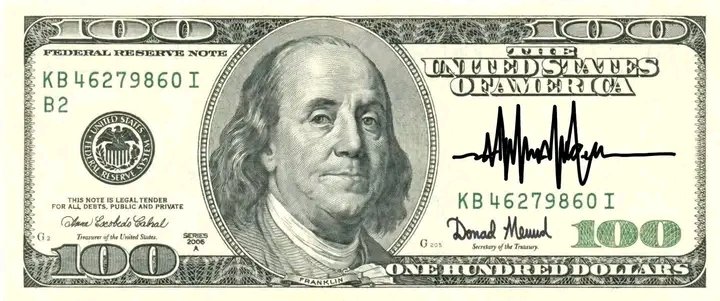
LMAO: President Trump’s signature is set to appear on U.S. currency as part of the Presidential First series to commemorate America 250 — and liberals are already losing their minds over it
The announcement that Donald Trump’s signature will appear on U.S. currency as part of the planned America 250 commemorations has sparked widespread debate across the political spectrum.
The “Presidential First” series, designed to honor the nation’s 250th anniversary, aims to highlight key leaders and moments in American history. Including presidential signatures is intended as a symbolic nod to the individuals who have shaped the country’s trajectory. However, Trump’s inclusion—given his polarizing legacy—has quickly turned what might have been a routine commemorative effort into a flashpoint for partisan reactions.
Supporters argue that featuring his signature is consistent with the series’ purpose.
As the 45th president, they say, Trump is undeniably part of the historical record, and excluding him would reflect political bias rather than objective commemoration. For them, the decision underscores the idea that national history includes all leaders, regardless of current public opinion.
Critics, on the other hand, view the move as inappropriate. They argue that currency, as a unifying national symbol, should avoid figures who remain deeply divisive. Some also question the timing, suggesting that historical distance is often necessary before commemorating controversial leaders in such a permanent and widely circulated format.
The reaction highlights a broader tension in how nations choose to remember their past. Commemorations like America 250 are not just about history—they also reflect present-day values and disagreements. Decisions about who or what to honor inevitably become proxies for larger cultural and political debates.
As preparations for the anniversary continue, it’s likely that discussions like this will persist. Whether one sees the inclusion as fitting recognition or misplaced tribute, the controversy itself illustrates how deeply intertwined history and contemporary politics have become in shaping public symbols.
