

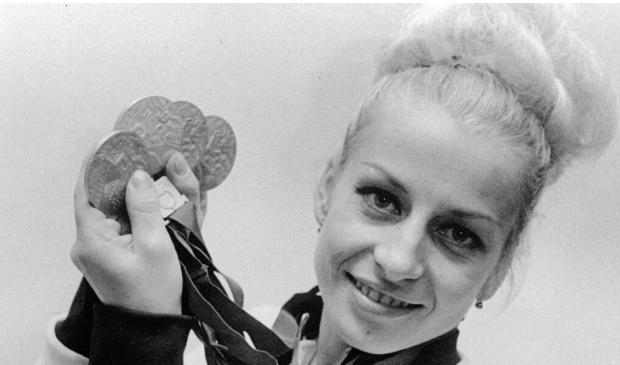
The Untold Final Chapter of Vera Čáslavská: How the Fearless Olympic Legend Faced Her Last Battle at 74
Few athletes in history embodied courage and grace quite like Vera Čáslavská. A seven-time Olympic gold medalist, she rose to global fame during the turbulent 1960s, becoming not only a gymnastics icon but also a symbol of quiet resistance. At the 1968 Mexico City Games, she famously turned her head away during the Soviet national anthem in silent protest against the invasion of Czechoslovakia—an act that made headlines worldwide and altered the course of her life.
After retiring from competition, Čáslavská faced years of political persecution under the communist regime. Yet the same resilience that carried her to Olympic glory sustained her through adversity. Following the Velvet Revolution, she returned to public life, serving as a respected sports official and advocate for youth athletics in her homeland.
In her later years, however, the champion confronted a more private struggle. Čáslavská battled pancreatic cancer, a devastating illness known for its aggressive nature. Despite the severity of her condition, she faced it with the quiet determination that defined her career. Surrounded by family, she passed away on August 30, 2016, in Prague, at the age of 74.
Her death marked the end of an era for Czech sport, but her legacy endures far beyond medals and podiums. Vera Čáslavská remains a symbol of integrity, bravery, and excellence—an athlete who stood tall not only in victory, but also in the face of political oppression and personal hardship.
Even in her final chapter, she proved what the world had always known: true champions never bow.
